
Will AI start-ups really invent the world of tomorrow?
How will AI start-ups be able to emerge and, more importantly, invent the world of tomorrow, given the challenges they face? On the one hand, the innovative potential of AI seems limitless. But on the other, they face fierce competition with equally substantial resources, and very real limitations: ‘access to…
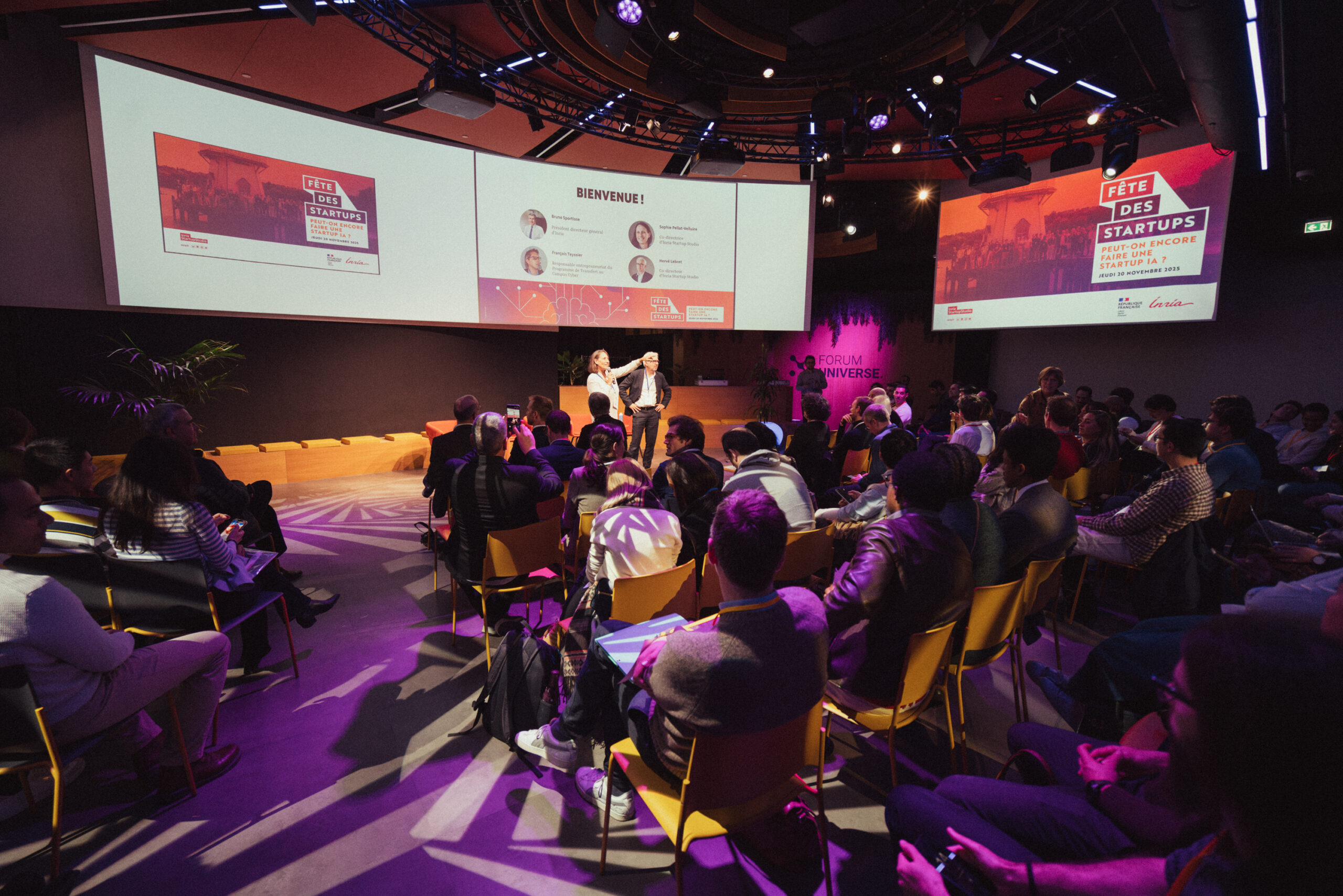
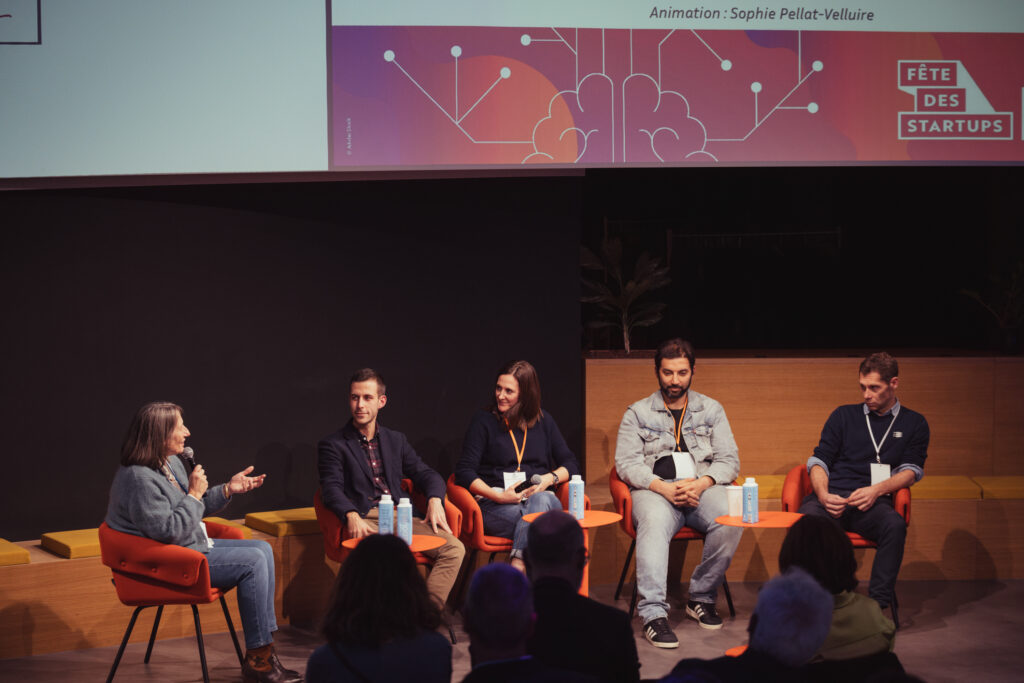
How will AI start-ups be able to emerge and, more importantly, invent the world of tomorrow, given the challenges they face? On the one hand, the innovative potential of AI seems limitless. But on the other, they face fierce competition with equally substantial resources, and very real limitations: ‘access to energy, the impact on the climate, challenges related to recruiting and retaining talent, regulation, and access to financing,’ lists Sophie Pellat-Velluire, co-director of Inria Startup Studio, in her introduction to a round table organised on 20 November during the Fête des Startups 2025.
Under these circumstances, it is difficult to say whether the start-ups that have emerged in recent years in the AI sector will be as successful as their predecessors in the digital era. ‘We live in a world that was shaped by start-ups 15 or 20 years ago,’ says Eléonore Zahlen, a lawyer at the Paris Bar and co-founder and partner of Bold, citing players such as Google and Uber, whose names have become common verbs and adjectives to describe online search or platformisation.
Regulation and funding: can start-ups compete on equal terms?
But more than regulation, which is merely a framework for protecting consumers and, more generally, European values and vision, the lawyer points to access to financing as the main barrier to the development of start-ups. “Yes, regulation can slow things down. But we can always work around it. It’s even a good thing if it helps to create reliable products that inspire consumer confidence. In this sense, it often aligns with the entrepreneur’s goals,” she adds, pointing out that instead of holding themselves back, startups that innovate while complying with regulations will gain additional competitive advantages. ‘Rather than coming up with a basic solution, it’s better to accept the rules of the AI Act, put a roadmap in place and take it step by step…’
But is it worth the effort, when American and Chinese giants are not bothered by these regulations? The question is posed by Mehdi Medjaoui, founder of Olympe.legal, an AI assistant that serves DPOs, and co-founder of the Apidays conferences. ‘ChatGPT has not respected any copyright laws to get where they are today. Similarly, Uber and Airbnb have systematically played games with legislators in the past. They are even the first to say that regulation is necessary, now that they have gained enough power to influence negotiations…’
But to reach this weight, you still need deep pockets. This leads to a paradoxical situation: “The question is not so much “Can we still launch an AI start-up?”, but ‘Can we launch anything other than an AI start-up by finding the funding? ‘ he explains, amused by the fact that, in order to attract investors, you often have to convince them of your ability to invent the world of tomorrow. ’As Alan Kay said: the best way to predict the future is to invent it. Many entrepreneurs, in Europe and especially in California, want to change the world. To the point where it becomes caricatural, as in the series Silicon Valley: in every pitch, it’s about making the world a better place. Whatever the technology, it will dominate its market before conquering others and, ultimately, changing everything. But what could be more appealing than the promise of revolutionising the world?”
AI: a means of solving problems or a risk of making them worse?
A ‘battle of imaginations’ that is only part of an increasingly fierce competition, according to Mehdi Medjaoui, who points out that as soon as ChatGPT releases a new feature, it kills off 20% of AI start-ups! This raises questions about the massive resources deployed in the sector.
‘AI allows us to do in a few days what used to take months. There has been an acceleration, but it raises a question: are we finding solutions to build a better world for tomorrow? Or are we exacerbating today’s problems?’ asks Baptiste Fradin, impact investor and CEO of Matters. “If AI has the potential to build a better world, we need to support the start-ups that will facilitate its development. But an impact fund like Matters also looks at the positive or negative externalities generated by a company when investing. When we talk about AI, we’re talking about energy consumption, which is enormous. Today, AI accounts for 10% of data centre consumption, and is expected to account for 50% of it by 2030.”
A set of problems that need to be addressed, or not, according to Nicolas Turpault, founder and CEO of Sonaid. He has made his choice: his AI embedded in connected objects can identify sounds characteristic of an emergency situation and automatically raise the alarm. By design, his solution is energy-efficient and compliant, with data processing taking place locally. “We are surrounded by connected objects, but none of them automatically trigger to help you in case of need. On the other hand, you can ask an LLM all sorts of things. If we devote all our resources to solving one problem, we’ll have a better chance of solving it quickly, but there will be plenty of other issues that we won’t be able to solve. Above all, it’s human choices that will enable us to move forward. AI is just a tool.”
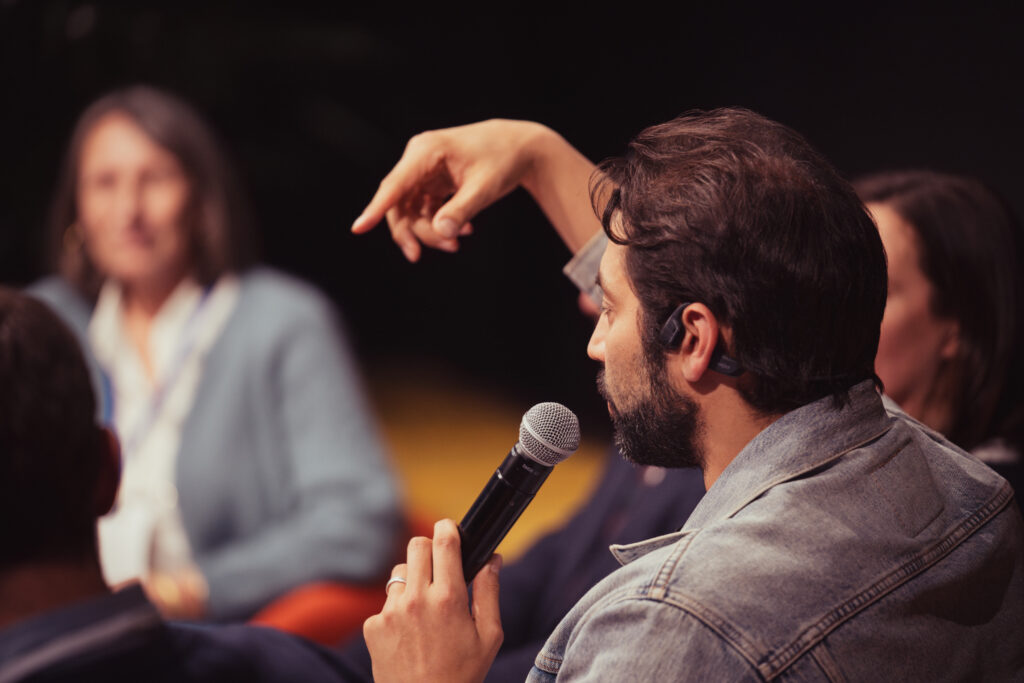
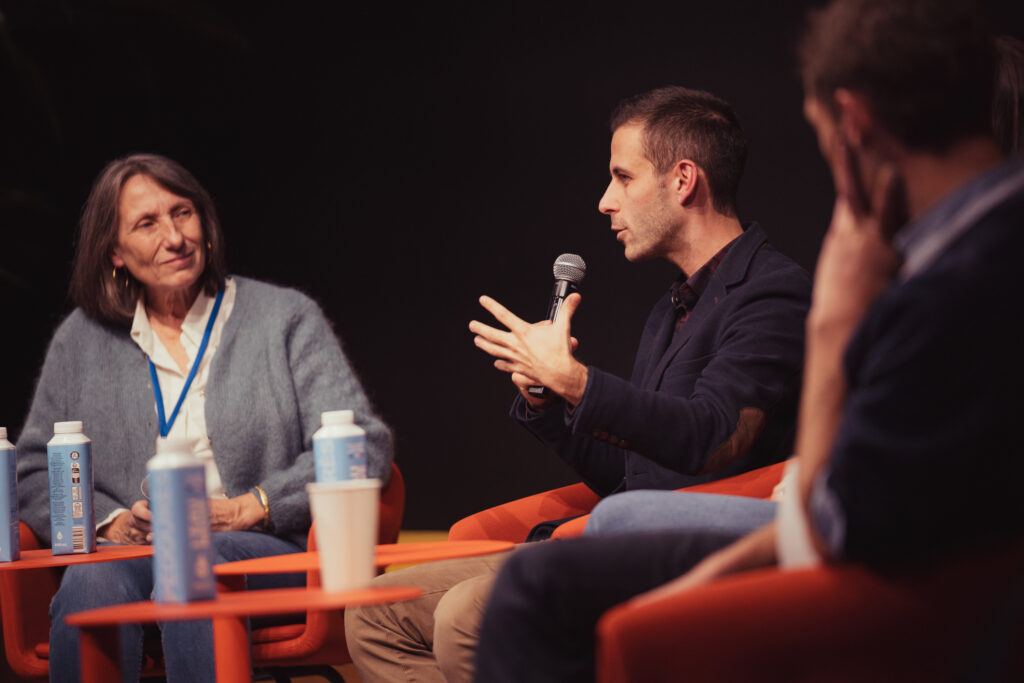
‘Go for it, forget that you don’t stand a chance.’
He concludes: ‘Ask yourself why you are creating your start-up. Don’t do it just for the money, it doesn’t work. Above all, make sure you are aligned with your values.’ This approach makes sense, both for employees and for manufacturing partners, who are delighted to be able to develop new services based on these solutions embedded in their products.
This prompted the participants in this round table discussion to share some advice with the audience. While Éléonore Zahlen believes that ‘start-ups have a great responsibility, almost greater than that of legislators’ to change the world, Mehdi Medjaoui advises that, in order to achieve this, they must give themselves the means to fulfil their ambitions. ‘And above all, surround yourself with the right people.’
‘Go for it, forget that you don’t stand a chance, but proceed methodically,’ says Baptiste Fradin, referring to the film Les Bronzés font du ski. Because, as Nicolas Turpault reminds us, the most important thing is ‘not to be afraid of failure, because it’s okay to fail.’
Publication date: 08/12/2025

Sophie Barre
Want to get started ?