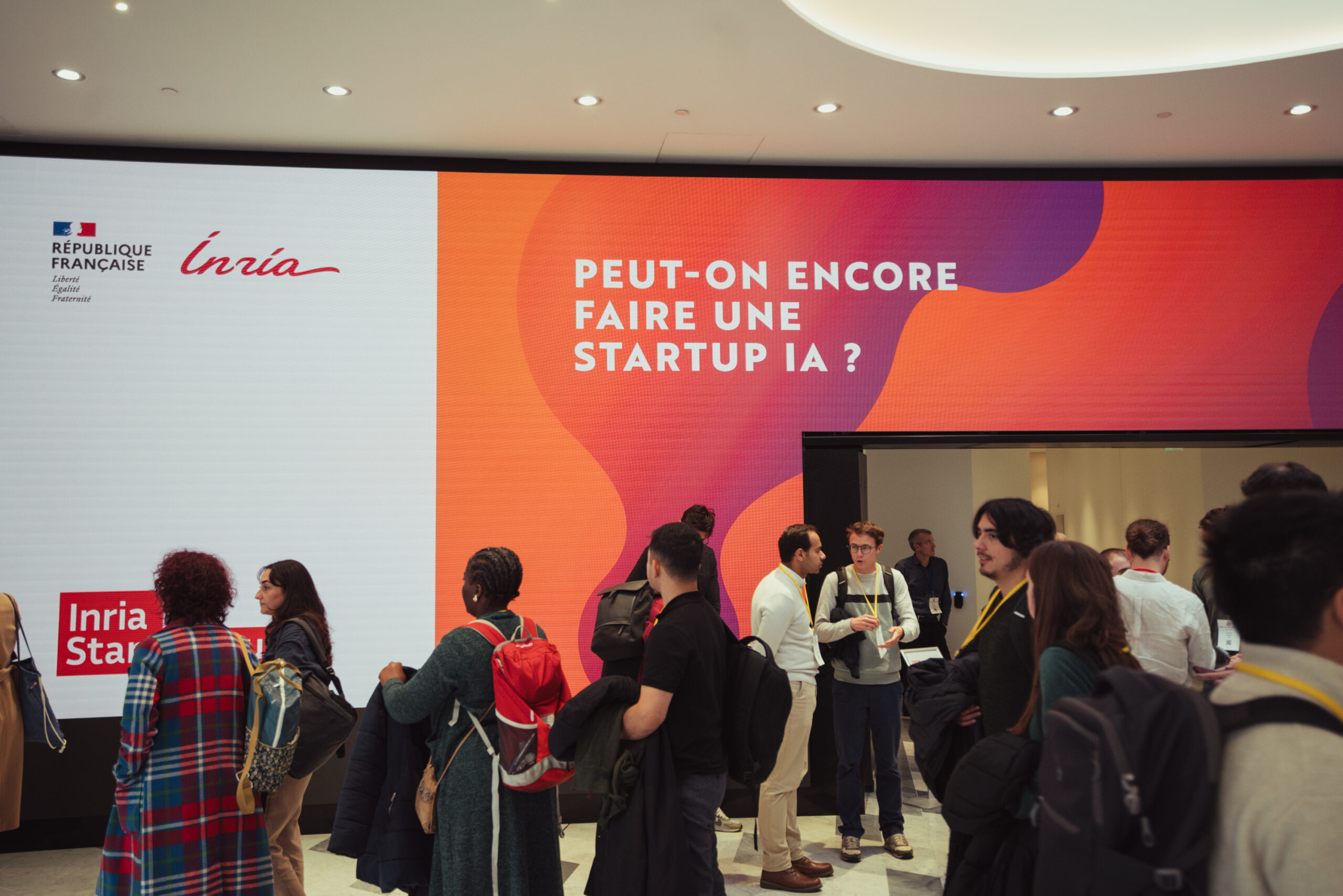
Can we still start an AI start-up?
The opportunities and challenges of entrepreneurship in artificial intelligence were at the heart of the 2025 Start-up Festival organised by Inria Startup Studio. A look back at this event, which brings together researchers, entrepreneurs and investors from the French ecosystem. Three years after ChatGPT, AI continues to disrupt not only…
The opportunities and challenges of entrepreneurship in artificial intelligence were at the heart of the 2025 Start-up Festival organised by Inria Startup Studio. A look back at this event, which brings together researchers, entrepreneurs and investors from the French ecosystem.
Three years after ChatGPT, AI continues to disrupt not only consumer usage, but also the world of research, the start-up ecosystem and the major players in venture capital. With digital giants investing billions, several questions arise: ‘Can we still start an AI start-up?’, ‘What funding is available for AI start-ups?’ and ‘Will AI start-ups really invent the world of tomorrow?’
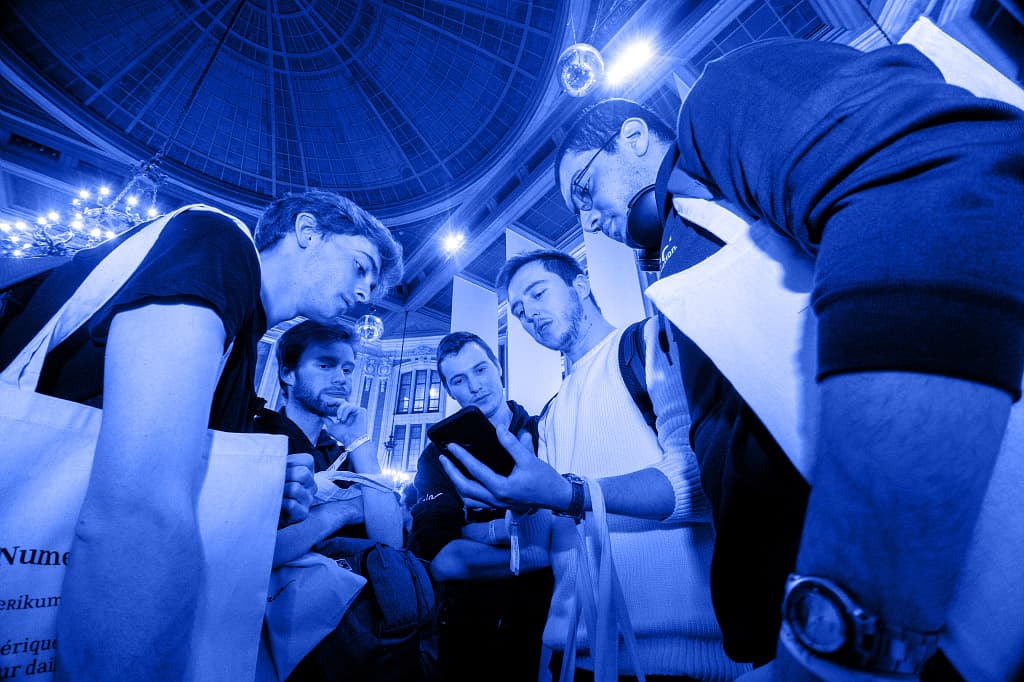
At a time when AI seems to make all kinds of initiatives possible, it is natural to imagine that it will be at the heart of the next generation of start-ups capable of changing the world. However, there are many obstacles: ‘access to energy, the impact on the climate, challenges related to recruiting and retaining talent, and access to financing,’ lists Sophie Pellat-Velluire. ‘As a start-up, how can you navigate this complexity?’ asks the co-director of Inria Startup Studio to participants at one of the round tables at the Fête des Startups 2025 organised by the entity.

The best way to predict the future is to invent it
‘In all their pitches, entrepreneurs want to make the world a better place. Whatever the technology, it will establish itself in its market before conquering others and, ultimately, changing everything,’ says Mehdi Medjaoui, founder of Olympe.legal, an AI assistant for DPOs. And in the context of AI, this is partly true: ‘IT, the web, SAAS… AI. Of course, there are technical, and soon physical, limits to its development. But those who will convince investors are those who have a vision,’ says the entrepreneur. And what vision or promise could be more compelling than revolutionising the world?
“AI allows us to do in a few days what used to take months. There has been an acceleration, but it raises a question: Are we finding solutions to build a better world for tomorrow? Or are we exacerbating today’s problems?” wonders Baptiste Fradin, CEO of Matters, an impact fund that studies the positive and negative externalities of a startup’s activity before investing in it. ‘When we talk about AI, we’re talking about energy consumption, which is enormous. Today, AI accounts for 10% of data centre consumption, and is expected to account for 50% of it by 2030.’
Innovate or regulate… A question of choice
“AI improves efficiency, but it won’t solve environmental or societal problems. Above all, it is human choices that will enable progress. AI is just a tool,” warns Nicolas Turpault, founder and CEO of Sonaid, a start-up supported by Inria Startup Studio, which has developed AI embedded in connected objects capable of detecting all types of sounds, particularly those that can identify an emergency situation.
“If we devote all our resources to solving one problem, we’ll be more likely to solve it quickly, but there will be plenty of other issues that we won’t solve. It’s a question of choice. Being an entrepreneur means being able to develop a project that reflects your values,” he says, referring to the choice of IoT as a means of being more frugal and compliant with personal data protection.
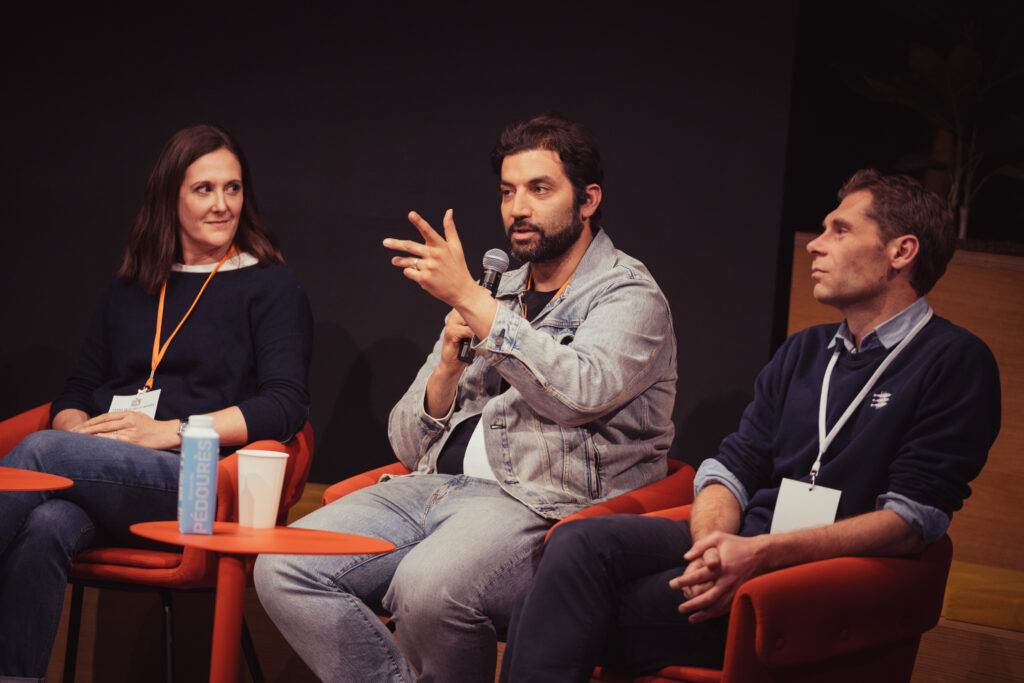
This raises the question of regulation, which ‘has the merit of asking what kind of world we want to live in tomorrow and trying to put in place the safeguards that will enable us to achieve it,’ says Eléonore Zahlen, a lawyer at the Paris Bar and co-founder of the Bold law firm, who believes that tomorrow’s world will be shaped by start-ups, just as today’s world has been, where entire sectors of the economy have been ‘uberised’ and where we ‘google’ when we search online.
But according to her, regulation and innovation are too often pitted against each other, when the main obstacle to innovation remains financing: ‘Entrepreneurs’ needs, in terms of both product quality and safety, are in line with regulatory requirements. But only financing can enable the development of this product.’
Artificial intelligence attracts the majority of capital
So, the question is not so much, ‘Can we still launch an AI start-up?’ but rather, ‘Can we launch anything other than an AI start-up by finding funding?’ asks Mehdi Medjaoui.
‘Between 50% and 80% of investor funds are directed towards AI companies,’ acknowledges Matthieu Lavergne, partner at Serena Capital and speaker at another round table dedicated to financing, moderated by Hervé Lebret, co-director of Inria Startup Studio.
Startups are constantly facing off against giants with colossal resources and significant access to users and their data. However, opportunities remain for investors who look at startups positioned ‘on the margins’ in niche segments, but whose technology has the potential to address other issues. ‘We have invested in a solution that specialises in distinguishing between speakers in an audio file. It is traditional AI, not LLM, which performs a very specific task, but one that is necessary for any audio processing. And we know that audio will be a means of interacting with AI, just like text. This makes the solution more attractive,’ explains Matthieu Lavergne.
Opportunities at start-ups capable of breaking down silos
The potential for ‘cross-fertilisation’ was mentioned by Hakima Berdouz, CEO of Hope Valley AI, a young start-up supported by Inria Startup Studio, whose AI can detect weak signals to predict rare events, from a nuclear reactor incident to breast cancer: ‘We have developed a fourth-generation AI that is ethical, frugal, cyber-secure by design and compliant with regulations. We had to position ourselves in one segment, oncology, with this first use case for breast cancer,’ explains the founder, who regrets this need for vertical positioning: “Our technology is generic, unlike investors! We focused on oncology because several of the eight patents filed this year relate to cancer detection. But eventually, we will probably create a subsidiary to address the industry.”
Faced with the American approach, which favours ‘cross-fertilisation’ between fields, she laments the reluctance of French investors, both in terms of vision and resources: ‘They are afraid to stray from the beaten path. We find ourselves struggling to raise €2 million, while our American and Chinese competitors easily obtain €10 million or €100 million.’
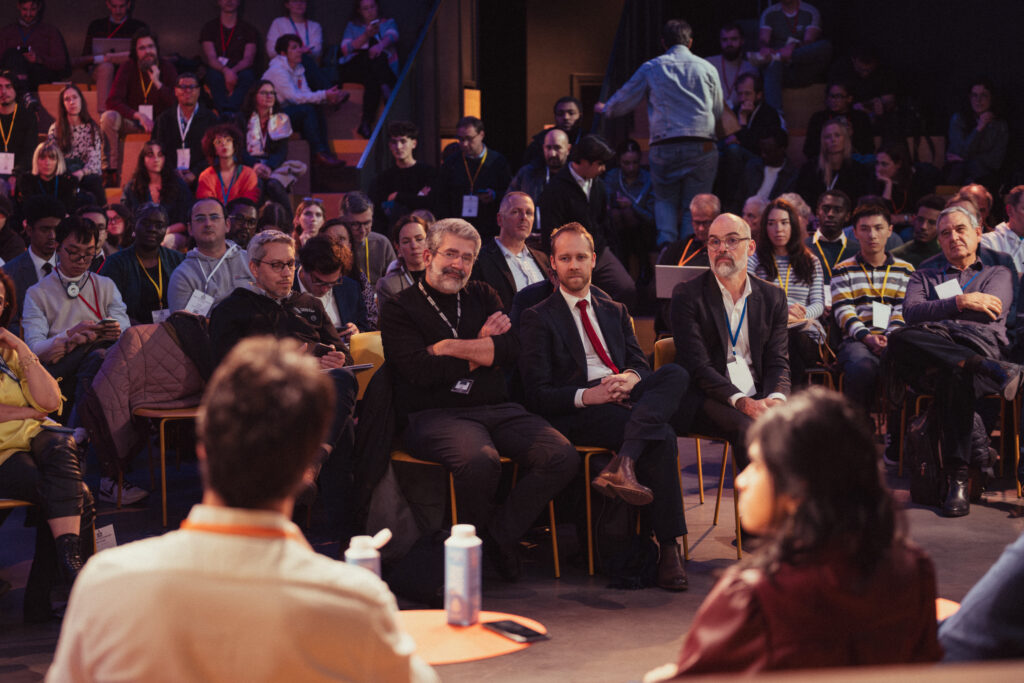
Sovereignty at the heart of France 2030’s investment thesis
But start-ups are not the only players impacted by AI and of interest to investors, as Nadi Bou Hanna, founder of the investment company Flore Group, explains. Although investment in AI is massive, he believes there are still segments to be conquered: “We have invested in a start-up from Inria Startup Studio which is, in short, an audio LLM. We are also increasingly looking at service companies that are “augmented” by AI. And more generally, established companies that have a customer base and recognised expertise, and whose business is being transformed by AI, with significant gains in competitiveness as a result.”
A detailed approach by Anuchika Stanislaus, digital and major projects advisor for France 2030, who, at the same round table, outlined the investment thesis for this programme launched in 2021 with a budget of €54 billion: ‘Our two pillars are: sovereignty, i.e. controlling our dependence and having a functional and secure solution to rely on; but also competitiveness, which must be assessed in the short, medium and long term.’ She compares the approach taken by France and that taken by the United States: ‘For them, the winners are not only those with the best models, but those that allow them to be used on a large scale. But hyperscalers are developing tools for those behind a desk,’ whereas France 2030 is banking on the fact that everyone will benefit from advances in AI, from restaurant owners to road hauliers, not to mention farmers.
Data and science: the main assets of an AI start-up like Therapixel
A good summary of the various topics covered during this Start-up Festival was provided in the closing keynote speech by Pierre Fillard, founder and Chief Science Officer of Therapixel, a pioneering AI and healthcare company in France, which emerged from Inria and was founded in 2013.
Specialising in breast cancer detection, the solution offers a medical device that helps radiologists analyse nearly 2 million mammograms each year to find abnormal findings.

But to achieve this, Pierre Fillard had to overcome many challenges: “It took us three to four years to collect a complete database, which was necessary to train our model. During that time, we had no income, so we had to raise funds. The regulatory aspect of launching a medical device can be a difficult hurdle to overcome if you don’t start early enough. And finally, there’s the market… Will our product find buyers? That’s the big question!”
These challenges have not prevented Therapixel from pursuing its quest for excellence: “We never stop innovating, to the point where we don’t patent our innovations, because what we are currently working on will make what we might have patented obsolete. ‘ What’s more, ’data, and your ability to secure access to it, are more important than a patent. We have data from just over a million patients, representing 5 million examinations and 10 to 15 million images. We continue to add to this database every day.”
But while ‘data and science are the rocket’s engine, funding is its fuel.’ When dealing with investors, be careful not to overstate your company’s promise or your ability to deliver on it. “Raising funds means sharing a vision. Of course, you want to change the world, but you need to explain how, what steps you will take to get there, and how much funding you need to achieve your goals.”
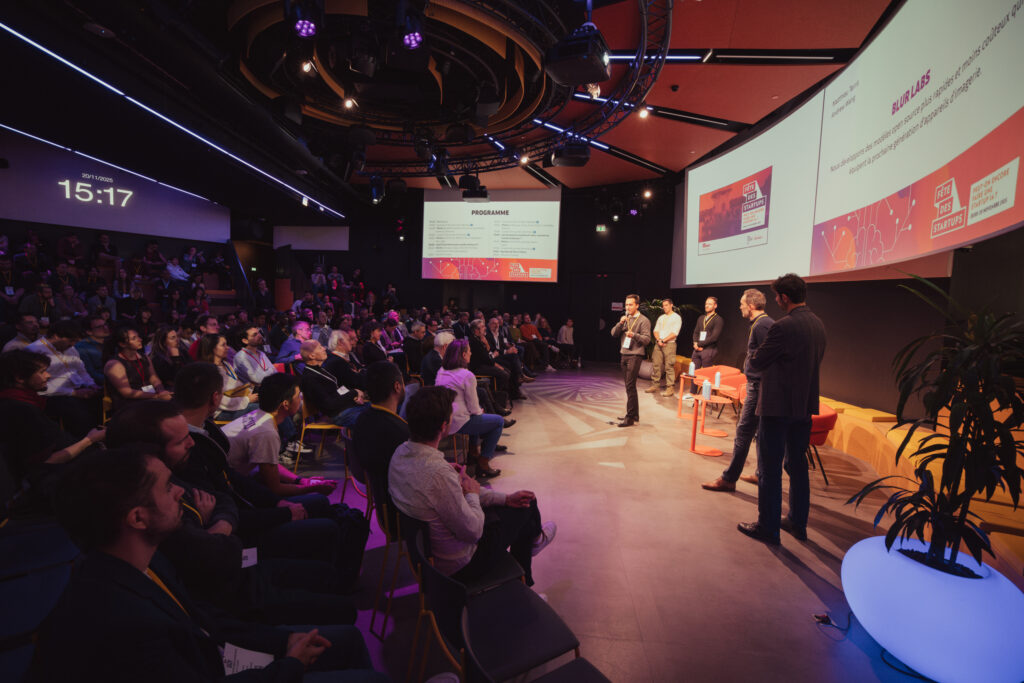
The programme for Startup Festival 2025
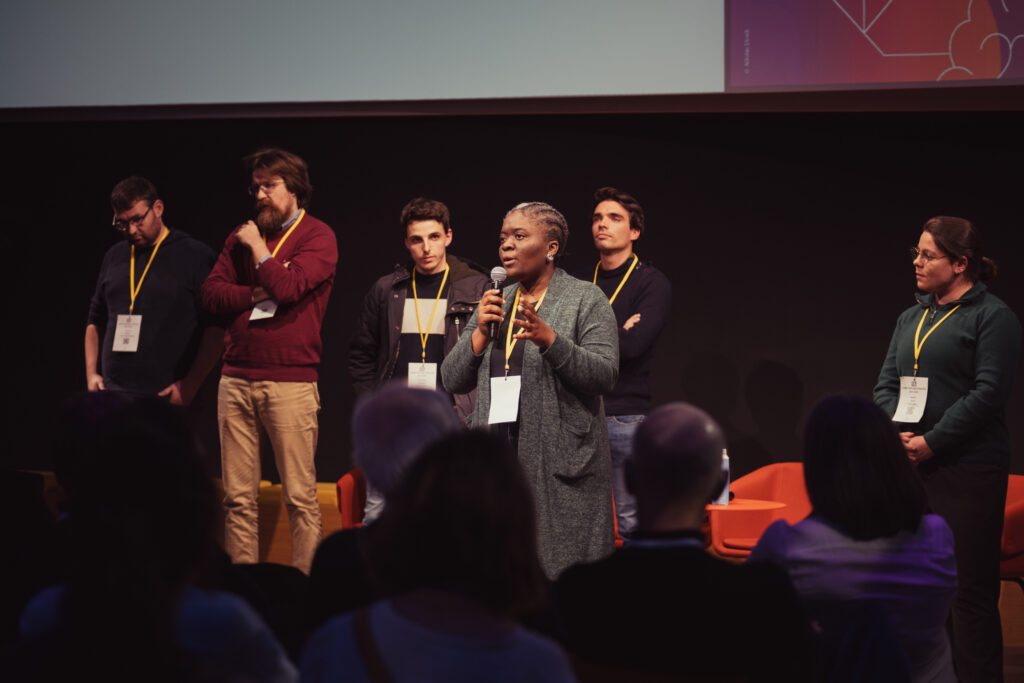
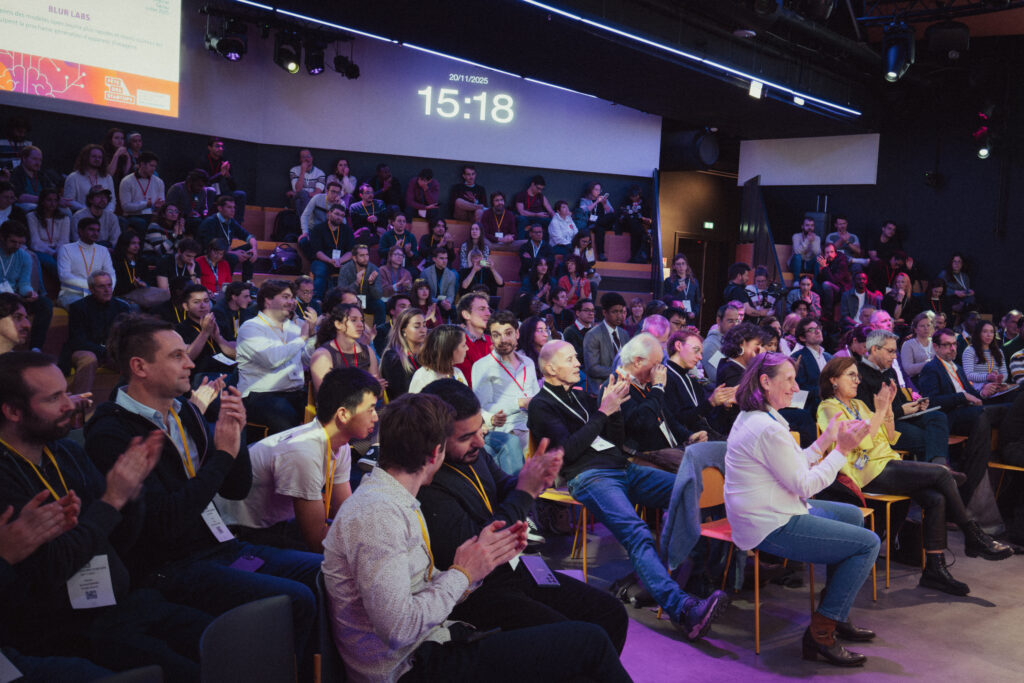
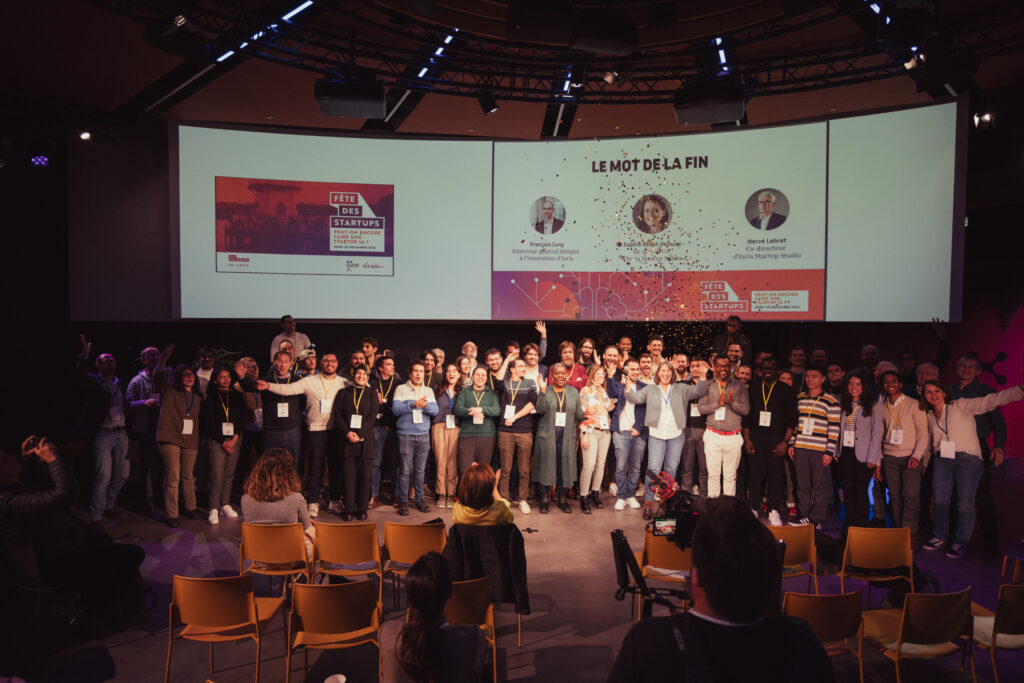
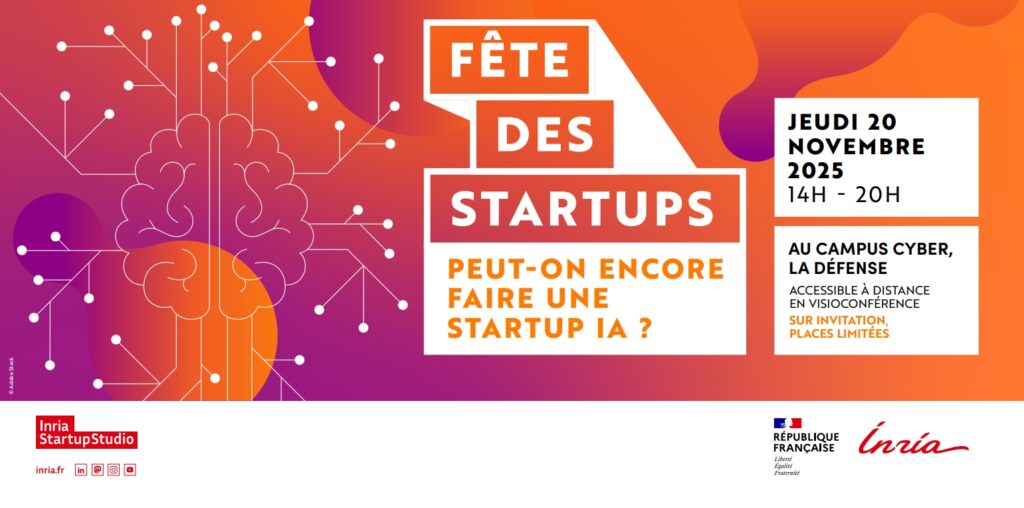
This new edition of the Inria Startup Studio Startup Festival, held on 20 November 2025, featured round tables and presentations that all sought to answer the question: ‘Is it still possible to launch an AI startup?’
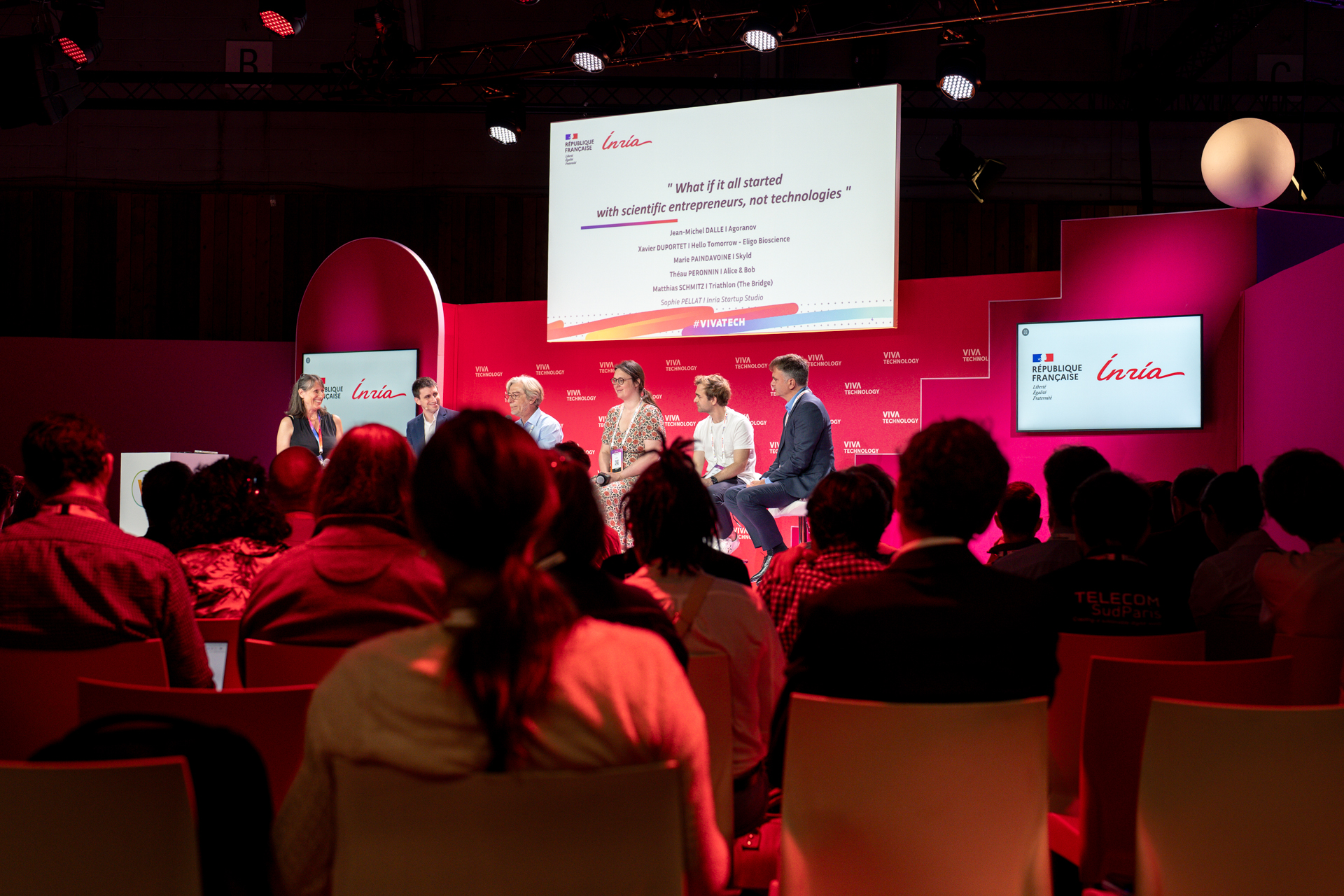
Round table: What funding for which AI start-up? Moderated by Hervé Lebret, co-director of Inria Startup Studio,
With the participation of:
- Hakima Berdouz, PhD Founder & CEO of Hope Valley AI
- Anuchika Stanislaus, Digital Advisor and Major Projects Advisor for France 2030
- Nadi Bou Hanna, Founder of Flore Group
- Matthieu Lavergne, Partner at Serena Capital
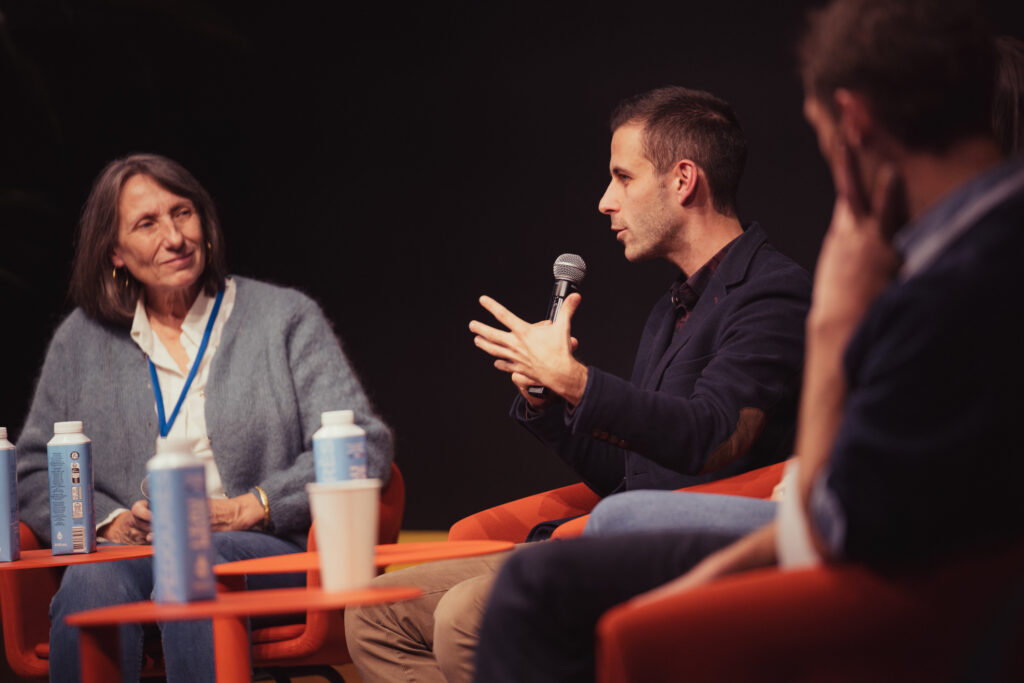
Round table: Will AI start-ups really invent the world of tomorrow? Moderated by Sophie Pellat-Velluire, co-director of Inria Startup Studio
With the participation of:
- Éléonore Zahlen, Solicitor at the Paris Bar, Co-founder & Partner at Bold
- Baptiste Fradin, Impact investor, General Manager at Matters
- Mehdi Medjaoui, Founder & CEO of Olympe.legal, Co-founder & Chairman of Apidays
- Nicolas Turpault, PhD Founder & CEO of Sonaid
Testimonials from entrepreneurs and researchers:
- Justine Bonnot, PhD founder & CEO of WeDoLow (start-up supported by ISS in 2019)
- David Sabbagh, PhD founder & CEO of Physight (start-up supported by ISS in 2023)
- Fabien Gandon, Research Director at Inria, Chairholder at 3IA Côte d’Azur
- Christian Duriez, Research Director at Inria, Founder & CEO of Compliance Robotics
- Serena Villata, Research Director at CNRS, Head of EP Inria MARIANNE and Member of the Artificial Intelligence and Digital Council
Pitches from start-ups currently supported by Inria Startup Studio: Akhet Solutions, Protomia, Superblabla, Avenzor, Vitidrone, Sand Fox, XHOLD, Cirus, Predeeption, Blur Labs, Augura Space, SensiPH, Proficlais, Vidjil biotech, MinimAI, Awdacity, Physicae, Facila, Green Field IT, AreWeMe, Shora AI, On the fly, Kerflow, Axiom, Cygon.
And finally, the closing keynote address by Pierre Fillard, founder and Chief Science Officer of Therapixel.
Publication date: 08/12/2025

Sophie Barre
Want to get started ?