What funding for which AI start-ups?
What are investors and other venture capital funds looking for when supporting an AI start-up? Find out with the panel organised by Inria Startup Studio at the 2025 Start-up Festival. In 2025, tens of billions invested in AI have become commonplace, as the subject attracts and fuels capital…
What are investors and other venture capital funds looking for when supporting an AI start-up? Find out with the panel organised by Inria Startup Studio at the 2025 Start-up Festival.
In 2025, tens of billions invested in AI have become commonplace, as the subject attracts and fuels capital and high expectations, to the point where one might wonder whether it is still time to bet on AI, and whether start-ups entering this niche will be able to compete with the giants of the sector.
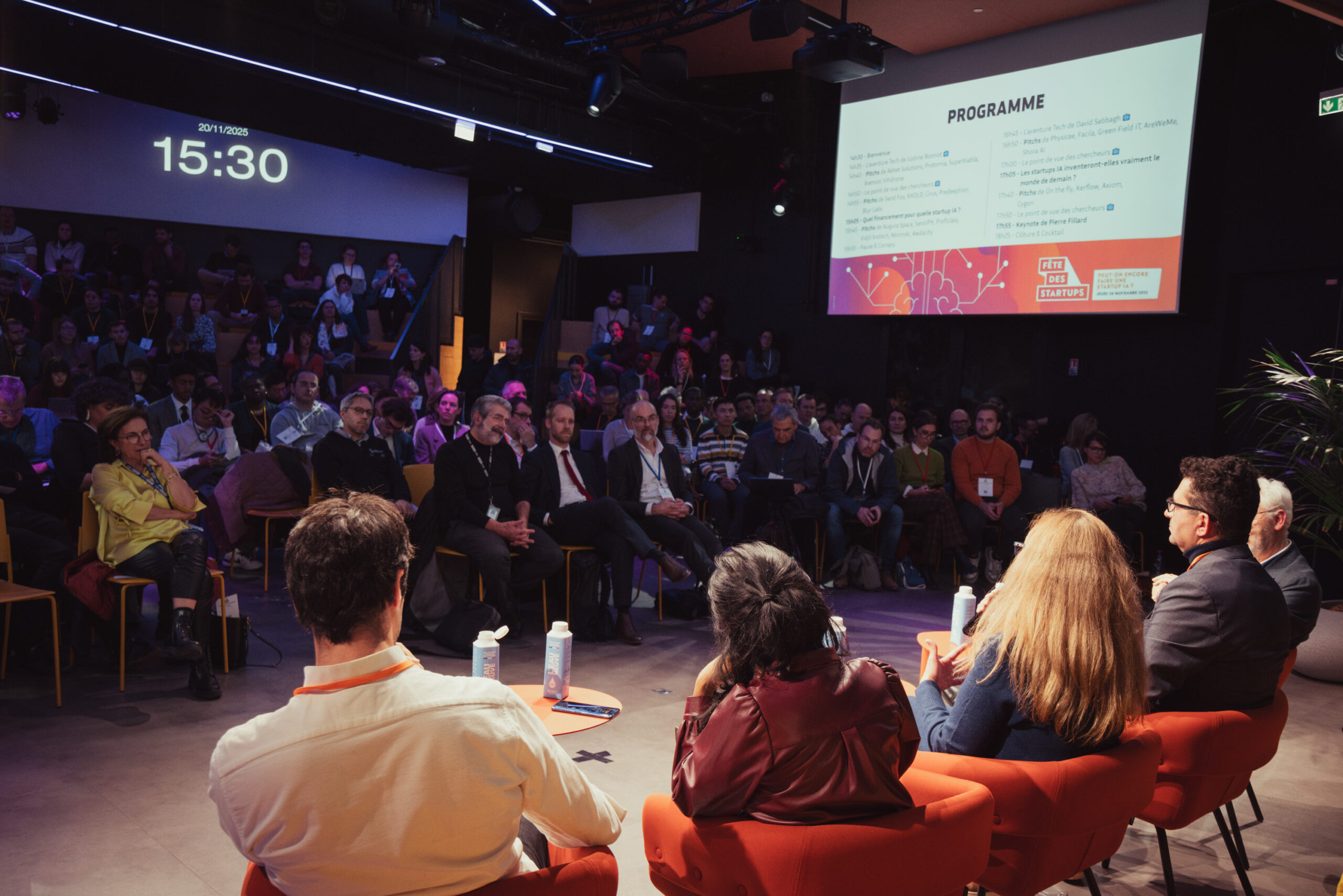
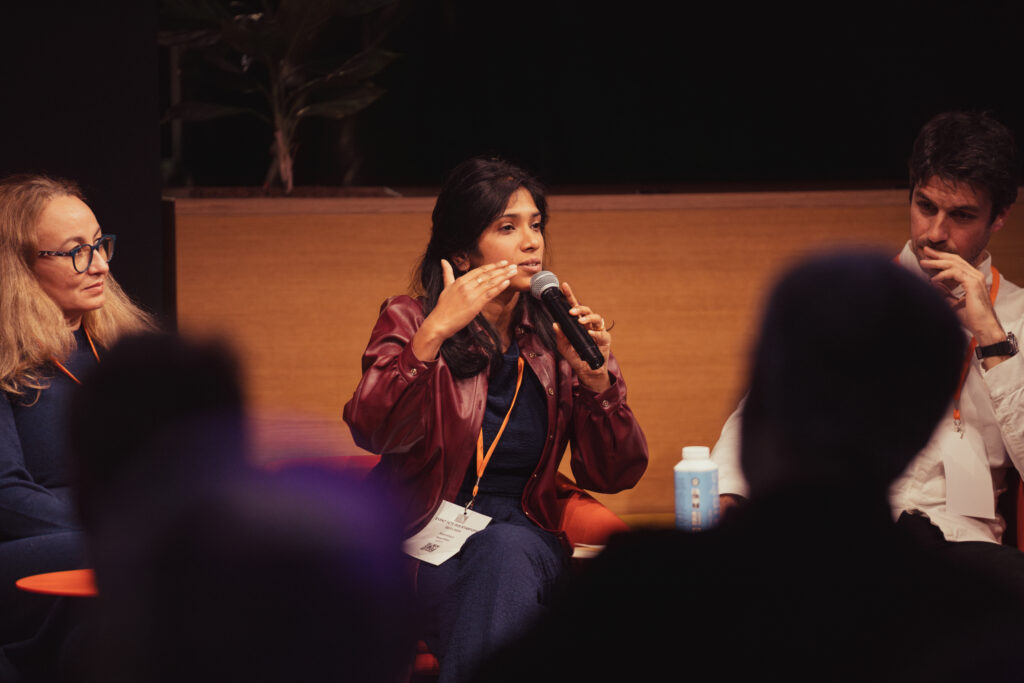
This question was at the heart of discussions between Hakima Berdouz, Anuchika Stanislaus, Nadi Bou Hanna and Matthieu Lavergne during a round table organised by Inria Startup Studio at the Fête des Startups 2025 and moderated by its co-director, Hervé Lebret.
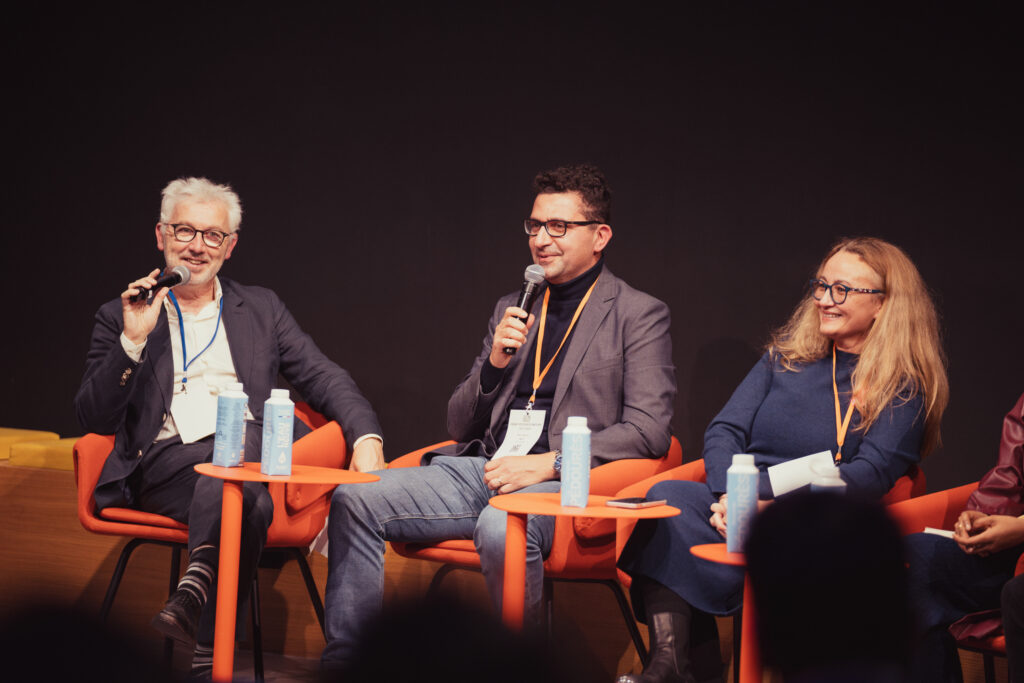
When it comes to AI, ‘we have passed the peak of inflated expectations and are now entering the trough of disillusionment at the end of 2025,’ says Nadi Bou Hanna, founder of investment company Flore Group, referring to Gartner’s Hype Cycle. Investors are now scrutinising the players likely to survive and reach the ‘plateau of productivity’.
Investing in AI-augmented businesses
However, he believes that opportunities do exist, even beyond start-ups: “There are still segments to be conquered. For example, we have invested in Nijta, a start-up from Inria Startup Studio that offers an audio LLM. But we are increasingly looking at service companies that are “augmented” by AI. And more generally, established companies with a customer base and recognised expertise, whose business is being transformed by AI, with significant gains in competitiveness as a result.”
He is joined by Anuchika Stanislaus, digital advisor at SGPI and France 2030, a €54 billion funding programme that aims to support the development of AI in all economic sectors with a focus on developing competitive and sovereign solutions. She cites the agri-food sector as an example, which is made up of 98% SMEs and is France’s leading industrial sector: “Margins are low, and AI will enable the automation of production facilities to cope with economic and geopolitical tensions. Where this is not the case, it will optimise existing facilities, for example through the use of new packaging designed by AI. This will increase margins. Finally, there is radical innovation, which can result from the use of data to imagine new services or products.”
To move beyond this theoretical approach and identify these solutions for the future, France 2030 has launched a call for projects entitled ‘Pioneers of Artificial Intelligence’, involving Inria, among others.
Focusing on start-ups capable of addressing multiple verticals
AI thus has the potential to revolutionise all sectors of the economy, just like the cloud or the SaaS model. This explains why ‘between 50 and 80% of investor funds are directed towards AI companies’, according to Matthieu Lavergne, partner at Serena Capital. From generative AI models to data infrastructures, he acknowledges, however, that it will be difficult to compete with giants with colossal resources and already significant access to data and users.
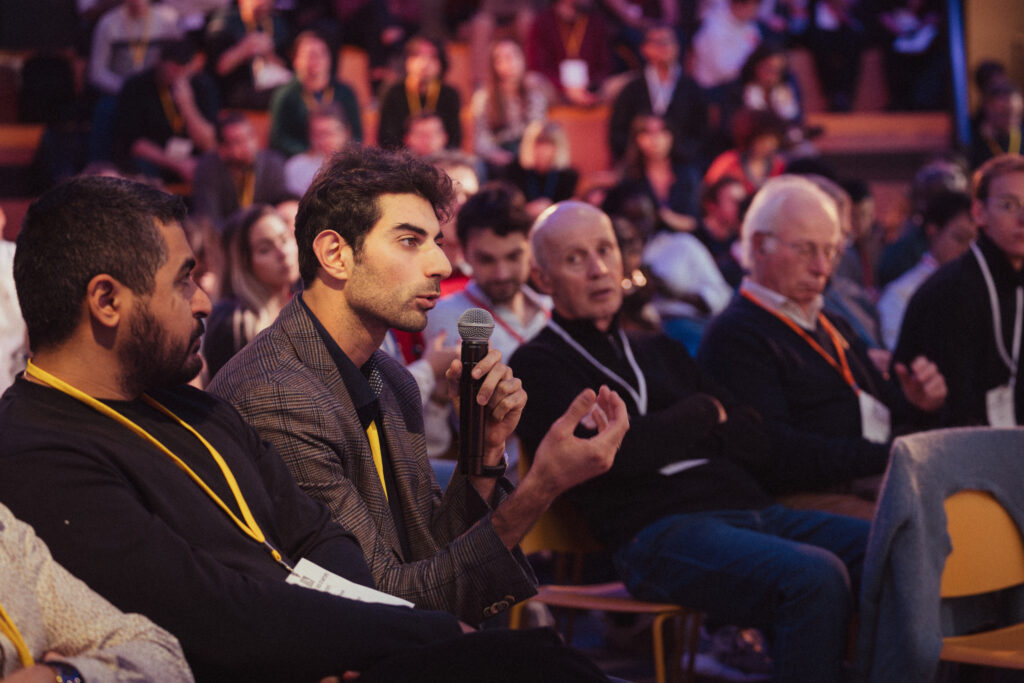
His advice? Invest in ‘fringe’ start-ups, i.e. those that appear highly specialised but whose solution has the potential to become central to other verticals: “We invested in Pyannote, a specialist in identifying and separating speakers in audio files. It’s traditional AI, not LLM, that performs a very specific task, but one that is necessary for any audio processing. And we know that audio will be a means of interacting with AI, just like text. This makes the solution more attractive,” says Matthieu Lavergne.
An example of this is Hope Valley AI, whose AI technology can detect weak signals to predict rare events, from a nuclear reactor incident to breast cancer, as explained by Hakima Berdouz, its founder and CEO: “Our technology is agnostic, unlike investors! We have focused on oncology because several of the eight patents filed this year relate to cancer detection. But eventually, we will probably create a subsidiary to address the industry.” She will make this transition with the help of Inria Startup Studio and MIT, where she will be a visiting scientist next year.
Faced with the American approach, which favours this ‘cross-fertilisation’ between fields, she laments the reluctance of French investors, both in terms of vision and resources: “They are afraid to stray from the beaten path. We struggle to raise €2 million, while our American and Chinese competitors easily obtain €10 or €100 million.‘ This leads the CEO to say that the ’real” investor in a technology start-up is, above all, its end customer.
Open source: a winning bet for investors
Finally, the possibility of investing in open source players appears to be another winning strategy, according to Matthieu Lavergne. In addition to promoting the circulation of ideas, and therefore ‘cross-fertilisation’, the open source model ‘outperforms closed models, especially at the infrastructure level’, explains the investor, who draws on 25 years of data collected by Serena Capital.
Especially since open source is very well funded, “thanks to a real windfall of capital on the market, and open source players find liquidity at the time of “exits”, when they enter the venture capital tunnel. This can take the form of an IPO or an acquisition, but the valuation multiples are often better than their non-open source equivalents,” says Matthieu Lavergne.
He is joined by Anuchika Stanislaus, who believes that the success of French open source players is the spearhead of sovereignty. ‘We are convinced that they will be a bulwark against non-European alternatives. Furthermore, these projects are also an important lever for knowledge transfer and skills development for our ecosystems,’ she explains, adding that France 2030’s calls for projects include a clause offering additional support when they incorporate an open source dimension.
Publication date: 08/12/2025

Sophie Barre
To continue reading

Want to get started ?